
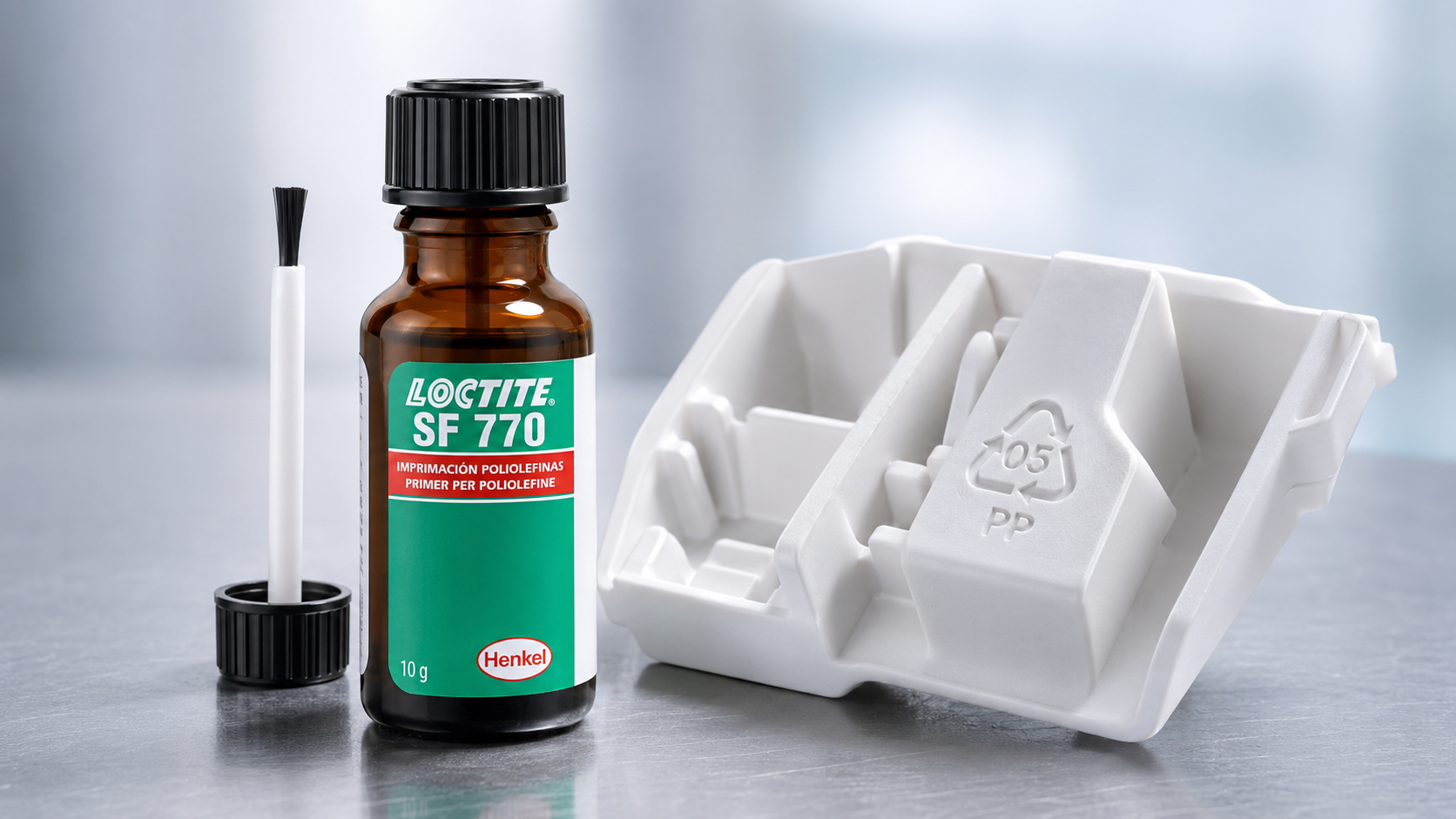
Some plastics are surprisingly difficult to bond. The adhesive may appear to hold at first, but the parts separate under relatively low force. In many cases, the problem is not the adhesive—it is the surface of the plastic.
Polypropylene (PP), polyethylene (PE), PTFE and some thermoplastic rubbers have what is called a low-energy surface. A simple comparison is water on a freshly waxed car: instead of spreading, it forms droplets. Adhesives behave similarly on these plastics and cannot properly wet the surface to create a strong bond.
Why roughening is often not enough
Polypropylene is lightweight, moisture-resistant and highly resistant to chemicals, detergents and alcohols. These are excellent properties for the finished component, but they also make bonding difficult.
Sanding or roughening may seem like the obvious solution. However, testing on polypropylene showed that surface roughening alone did not create a statistically significant improvement in bond strength. The main challenge