Monthly Archives: July 2026
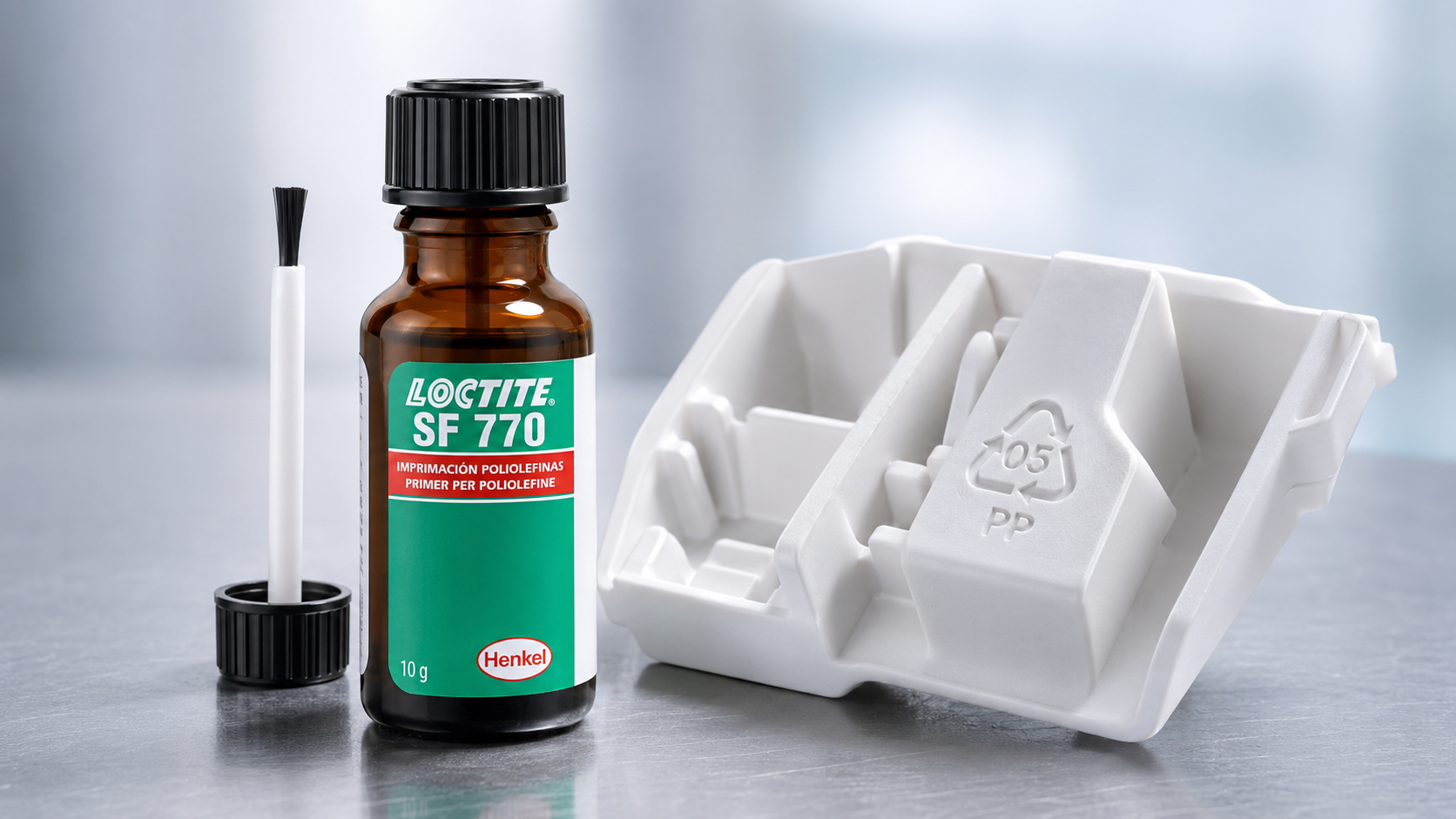
Some plastics are surprisingly difficult to bond. The adhesive may appear to hold at first, but the parts separate under relatively low force. In many cases, the problem is not the adhesive—it is the surface of the plastic.
Polypropylene (PP), polyethylene (PE), PTFE and some thermoplastic rubbers have what is called a low-energy surface. A simple comparison is water on a freshly waxed car: instead of spreading, it forms droplets. Adhesives behave similarly on these plastics and cannot properly wet the surface to create a strong bond.
Why roughening is often not enough
Polypropylene is lightweight, moisture-resistant and highly resistant to chemicals, detergents and alcohols. These are excellent properties for the finished component, but they also make bonding difficult.
Sanding or roughening may seem like the obvious solution. However, testing on polypropylene showed that surface roughening alone did not create a statistically significant improvement in bond strength. The main challenge
A good adhesive must create a reliable bond - even under heat, vibration and other demanding conditions. But today, quality also means being safer for the people who use it.
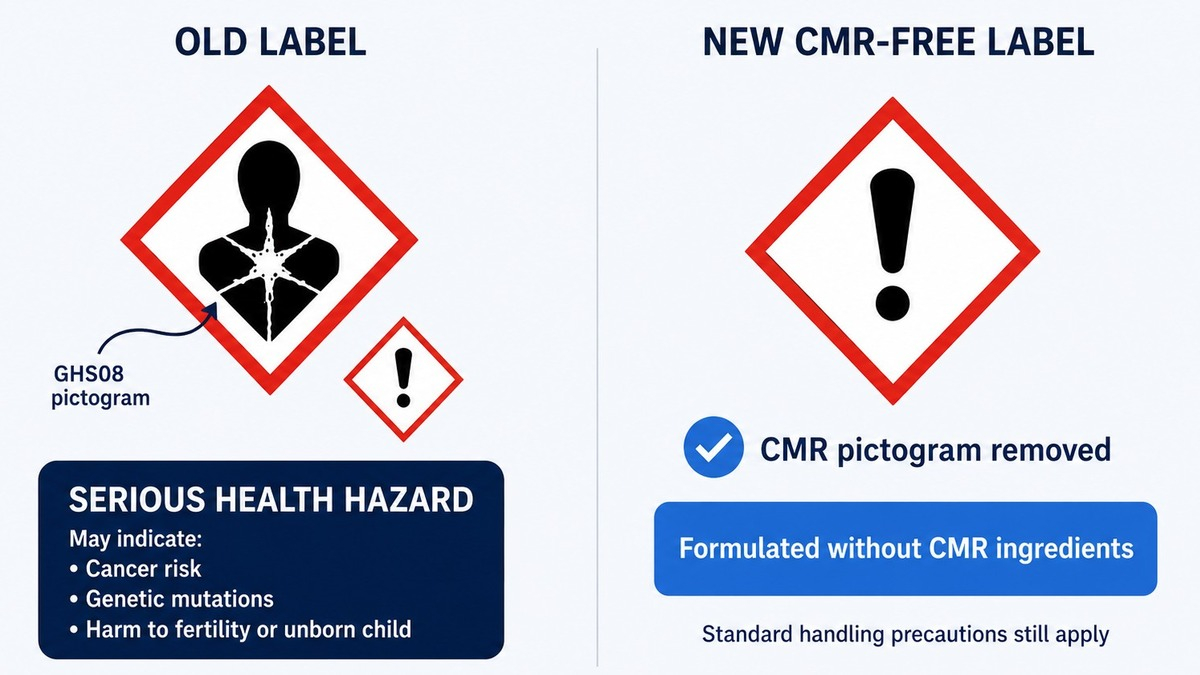
Look at an older bottle of LOCTITE instant adhesive. You may notice a pictogram showing a person with a starburst in the chest. This is the GHS08 serious health-hazard symbol. It can indicate ingredients linked to cancer, genetic mutations or harm to fertility and unborn children—known as CMR substances.
Henkel reviewed its popular LOCTITE cyanoacrylate range, including products such as LOCTITE 401, 406, 454, 495 and 3090. Hazardous ingredients were identified and replaced with more widely accepted alternatives.
The result is a safer formulation with the same trusted LOCTITE performance: fast curing, strong bonding and reliable quality.
CMR-free does not mean that safety instructions can be ignored. But if you can achieve the same result with a safer adhesive, why choose the older formulation?
At Bodo Möller Chemie